Turning 50 years of history into a navigable digital archive for Georgetown CCAS.
( CLIENT )
georgetown university, 2025
( ROLE )
design lead
( FOCUS )
alignment, architecture, strategy
Overview
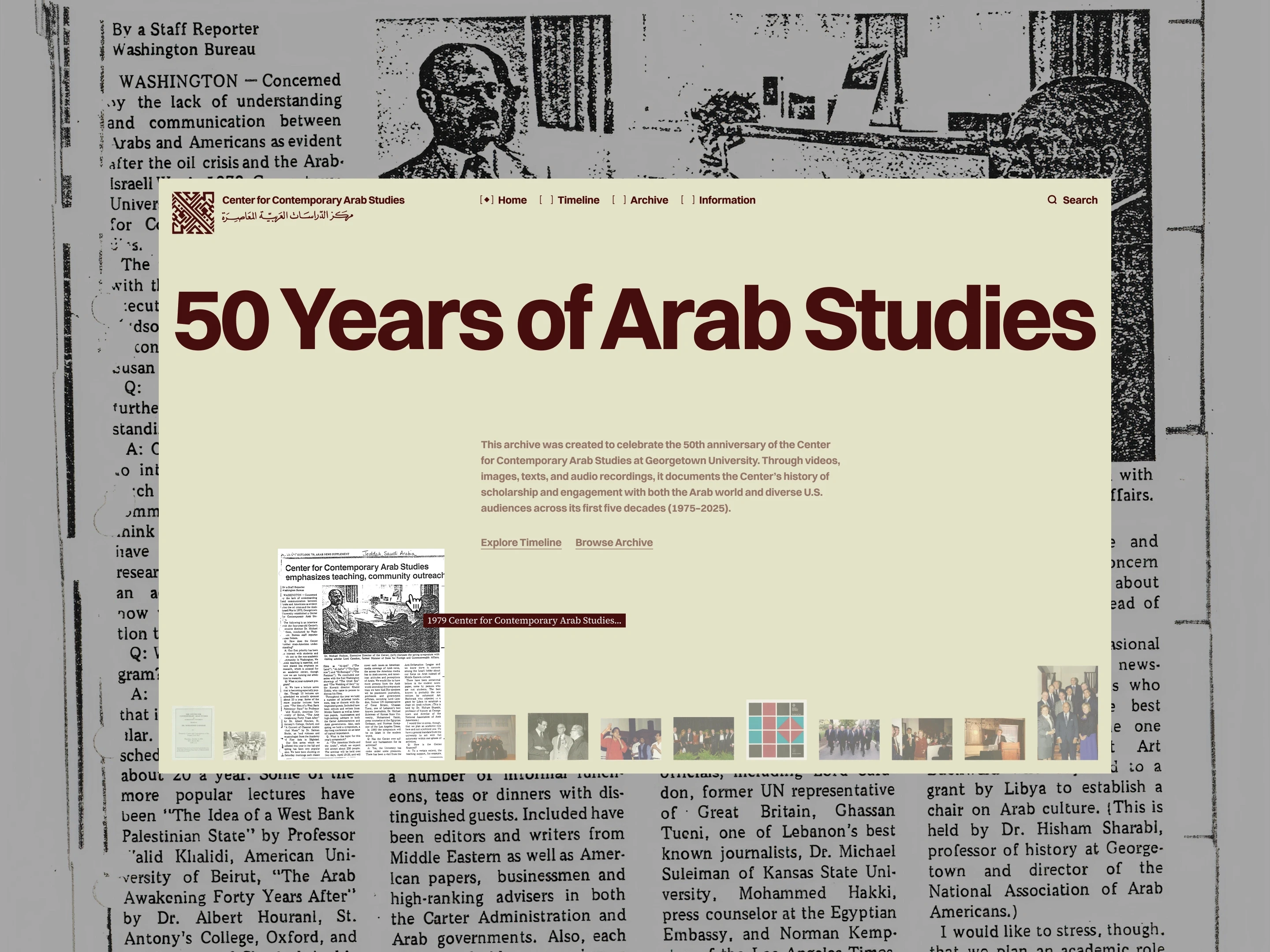
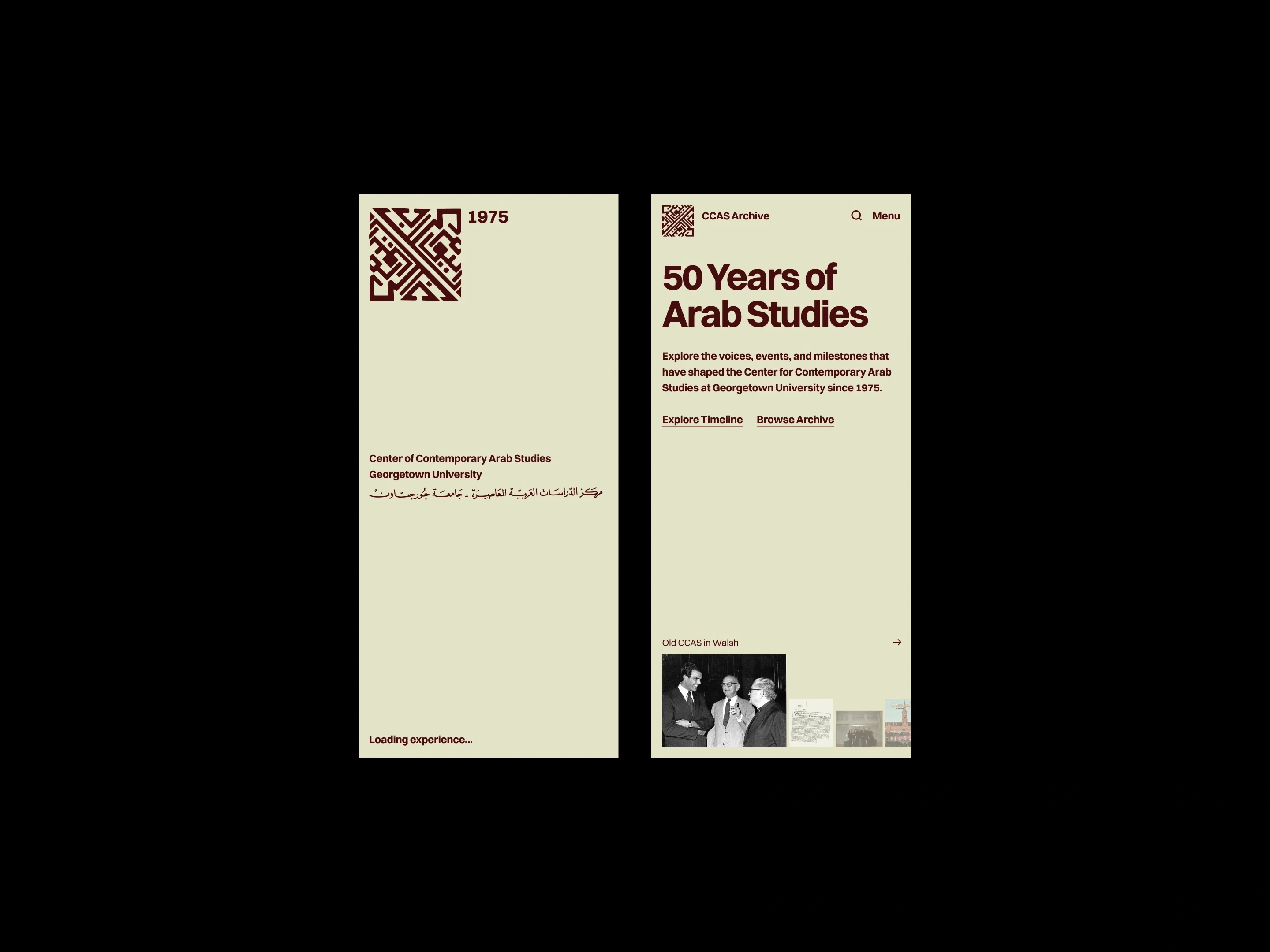
Georgetown's Center for Contemporary Arab Studies (CCAS) had meticulously archived 500+ items documenting 50 years of history including images, videos, documents, flyers, links, and audio. Over 12 weeks, we turned those items into a searchable archive + timeline that made half a century of scholarship accessible for the first time. The challenge wasn't technical. It was aligning 8 stakeholders with different visions into a single, maintainable solution that honored their legacy.
My role (Design Lead, Project Manager)
Facilitated workshops to align 8 stakeholders and clarify project vision
Led UX/UI design, information architecture, and visual direction
Managed project timeline, team coordination, and client communication
Directed CMS strategy and implementation approach
Conducted design QA to ensure execution matched intent
I've worked with
1 designer, 1 developer, 8 client stakeholders
Challenge
50 years, 500+ assets, infinite formats
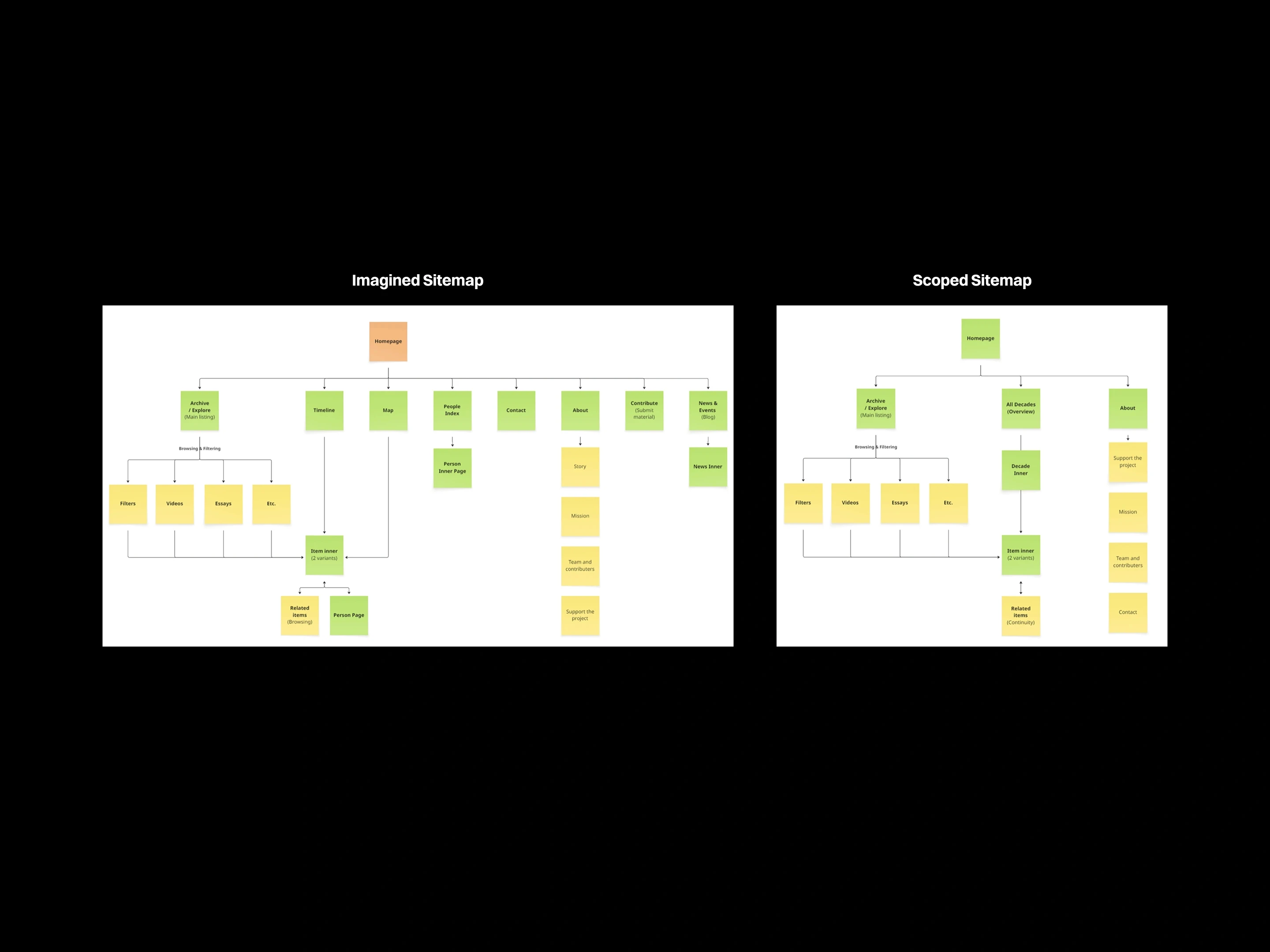
CCAS came to us with an ambitious vision: individual contributor pages, separated archive sections, a navigation map, and multiple ways to access content. With 8 stakeholders representing different areas of the center, we needed to find a unified approach that served everyone's goals. Faculty wanted to spotlight individual scholars. Staff needed something they could update without calling a developer. Leadership wanted the site to reflect 50 years of institutional weight.
"What story are we telling?"
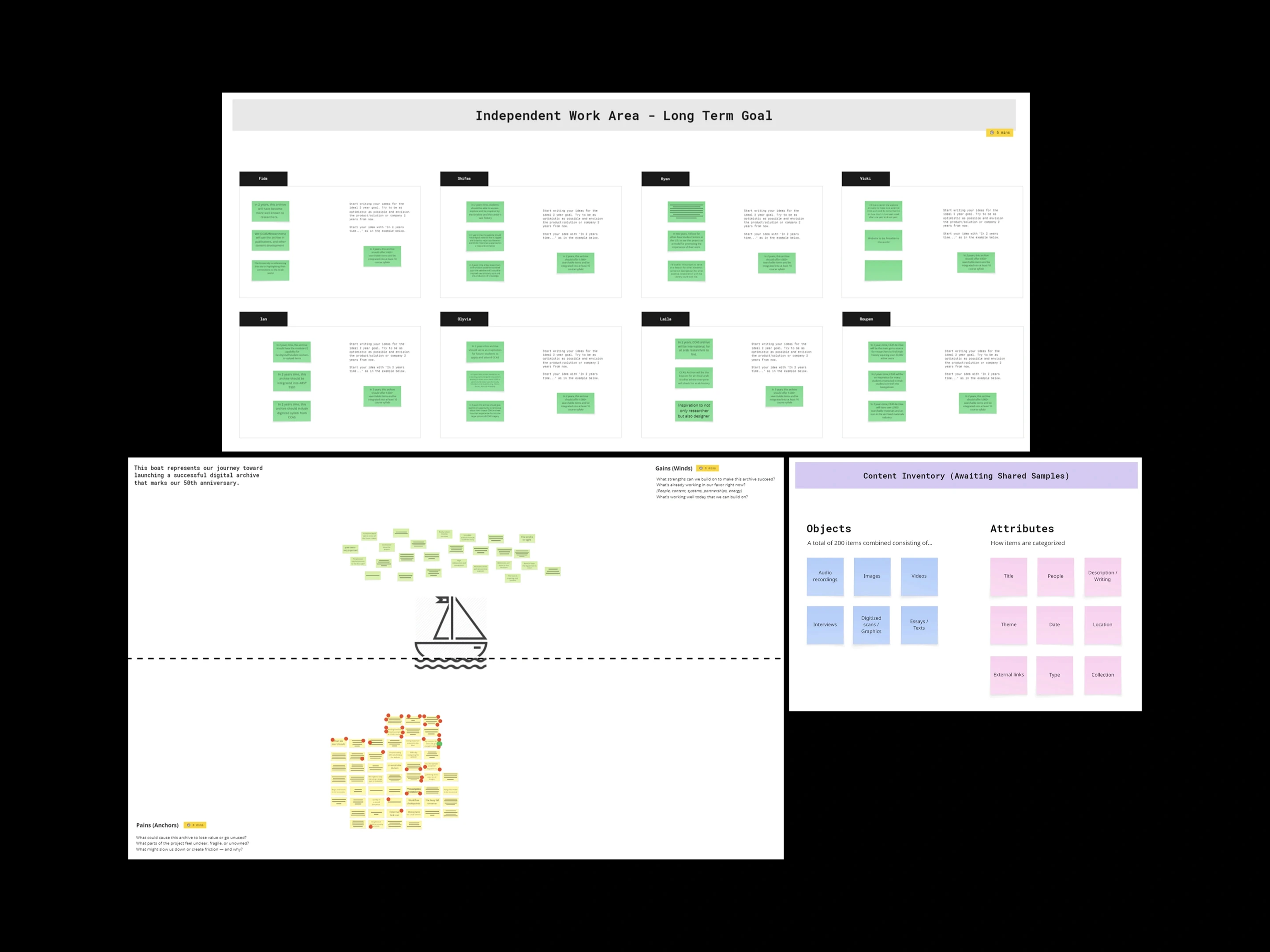
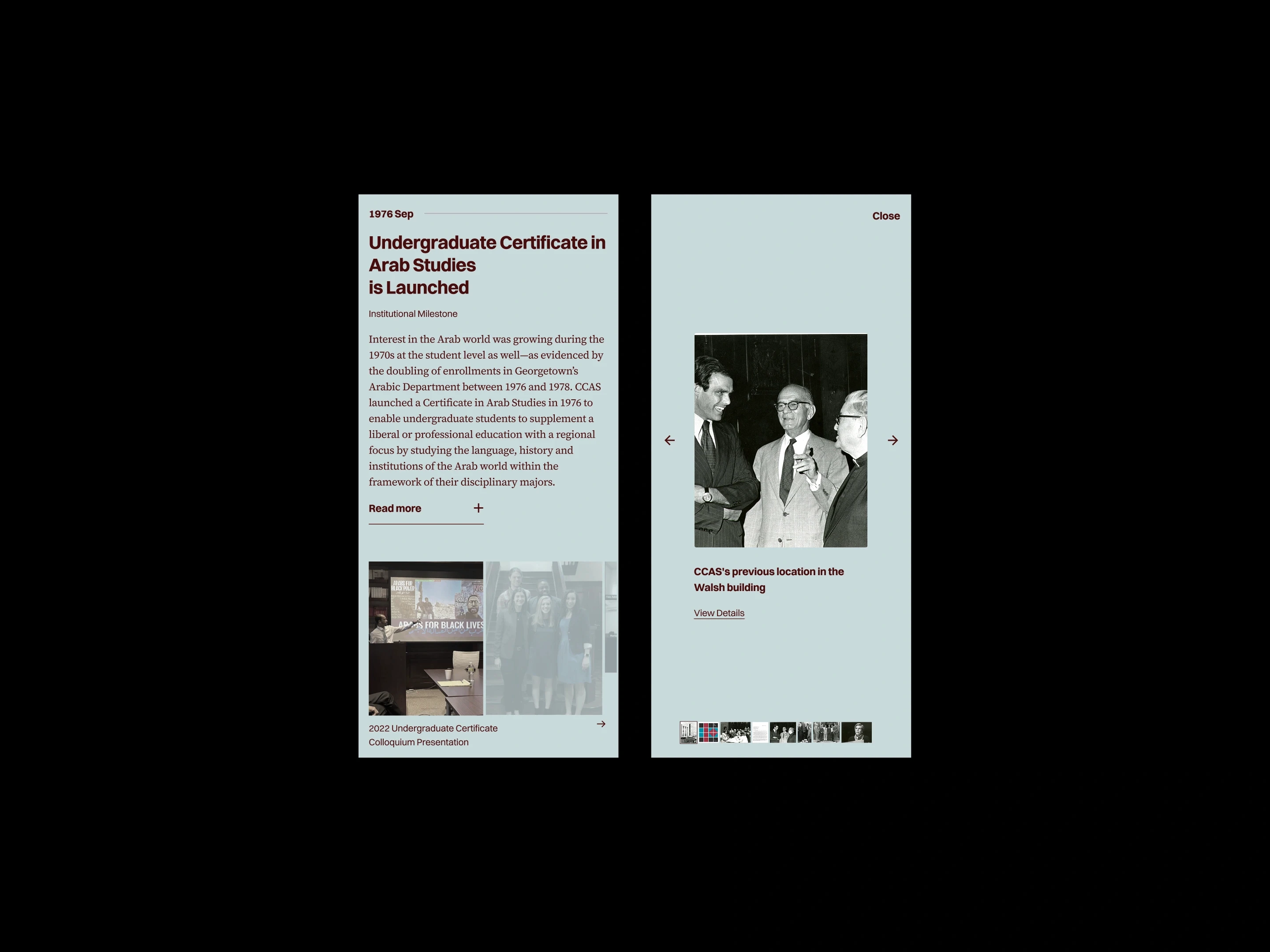
Through collaborative workshops, we explored one central question: What story are we telling? Once we aligned on "showing how the center evolved over five decades," the path forward became clear. We refined the scope into a unified archive where everything lives in one timeline. This focused approach shortened development by 3 weeks and created something the team could maintain independently.
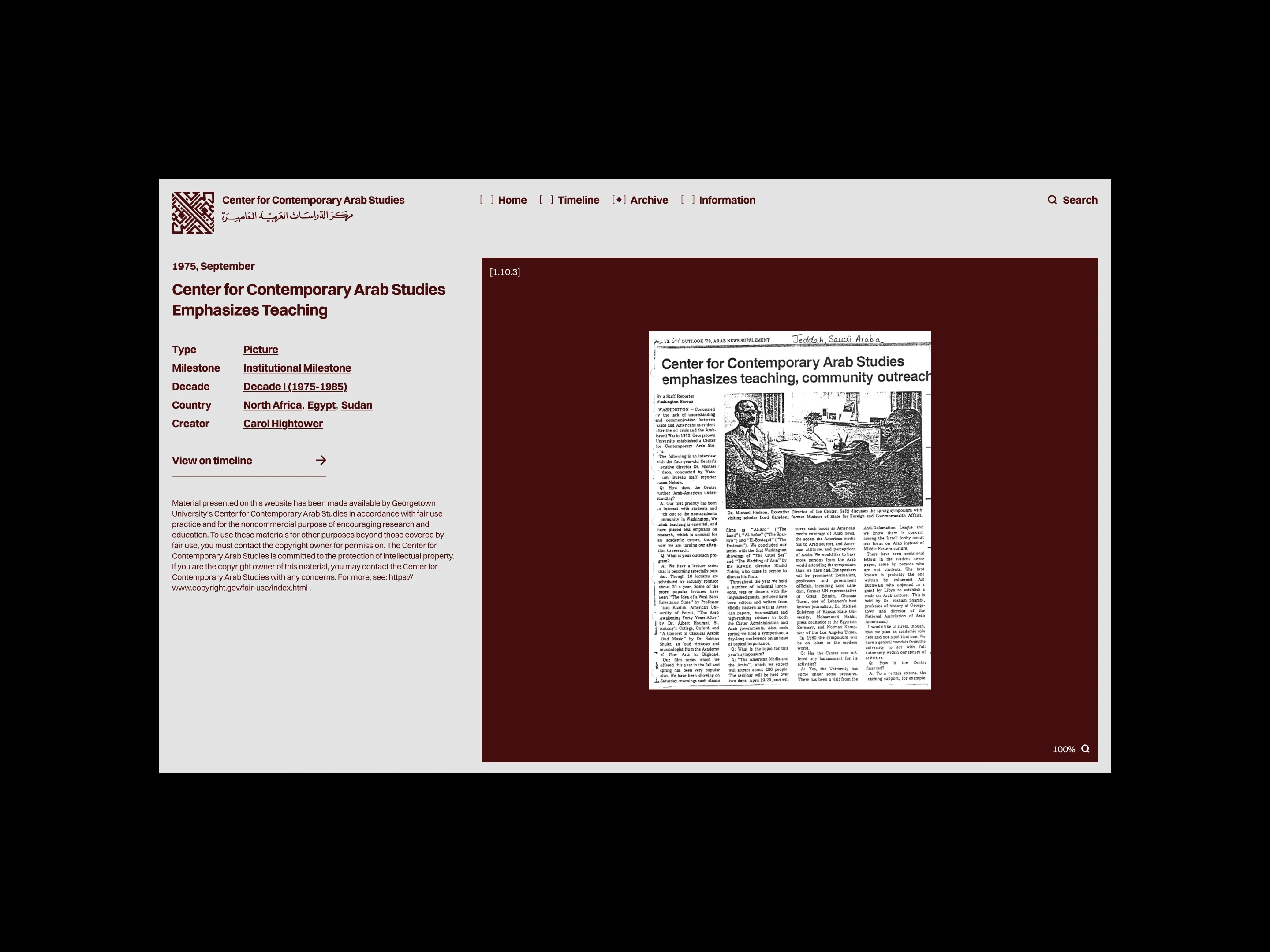
To ensure individual scholars remained prominently featured, we added contributor attribution and filtering that surfaces work by name.
Solution
Preserving 50 years through a modern digital lens
Making half a century public
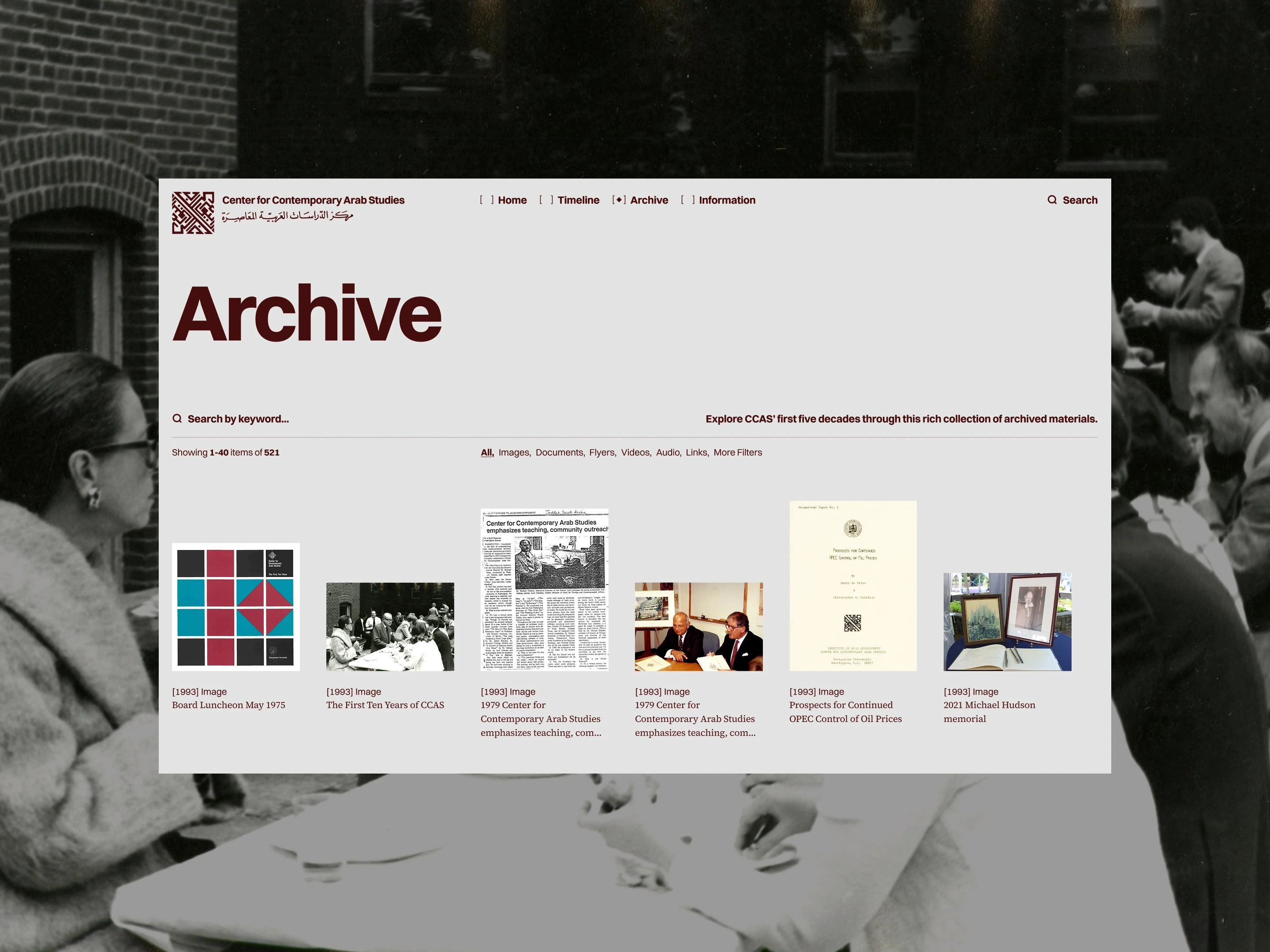
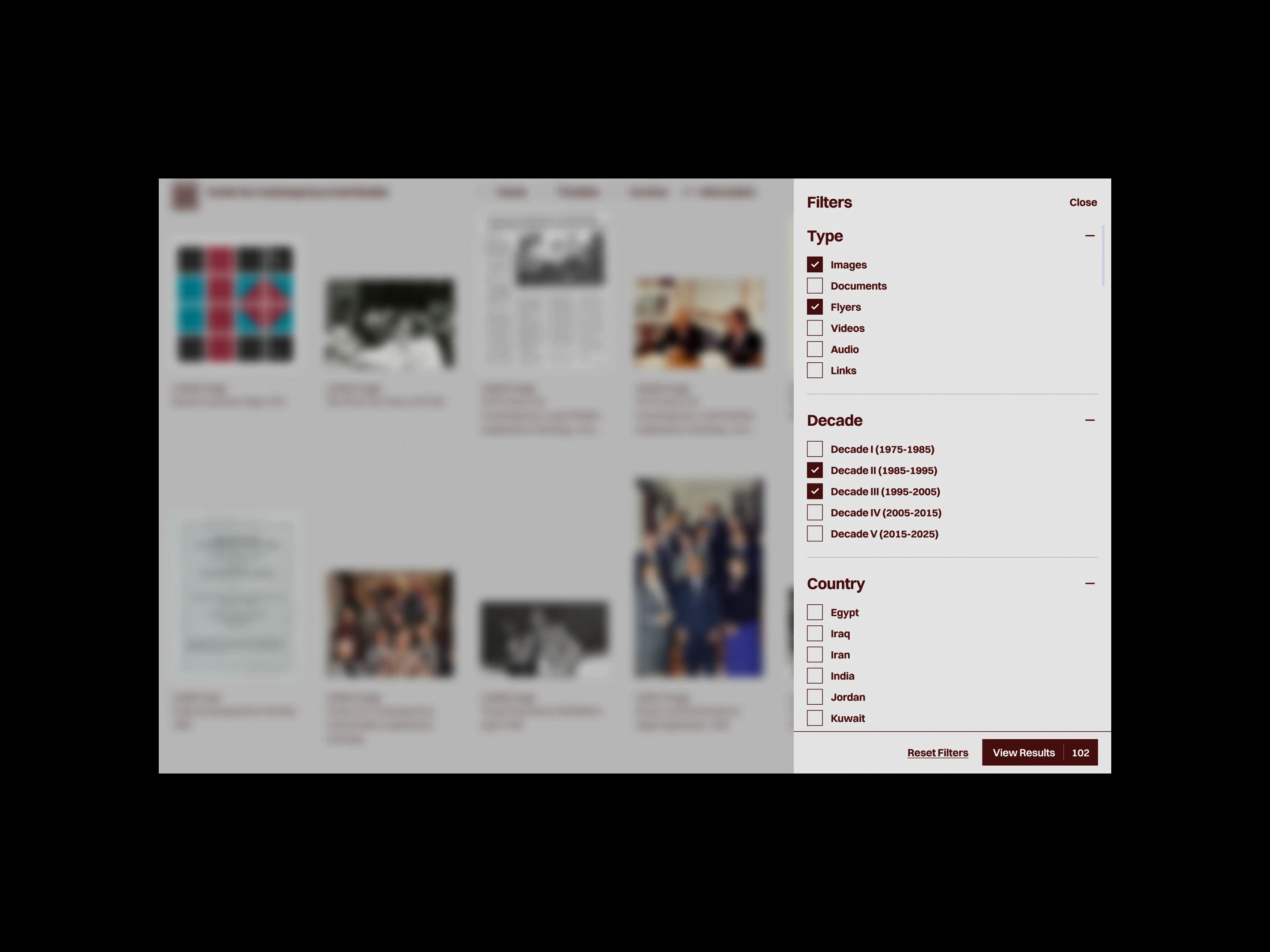
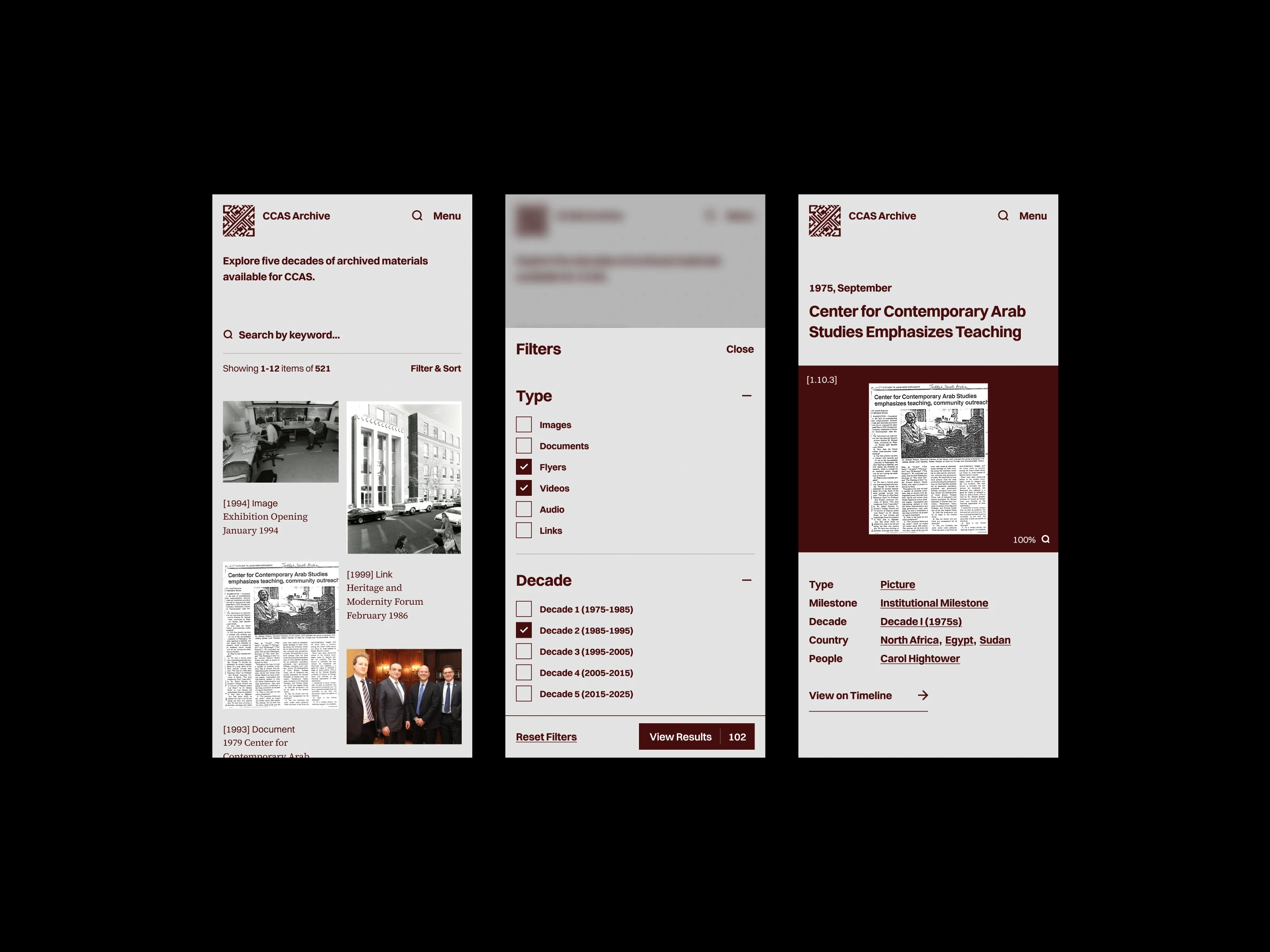
We built a timeline that preserves the chronological order of 50 years of events while making everything instantly searchable and filterable. All content types, images, videos, documents, flyers, links, and audio, live together as equals. Users can browse the full timeline to see how CCAS evolved or filter by content type, date, or keyword to find specific material in seconds.
This revealed patterns that weren't visible before. Clusters of symposia during major geopolitical shifts. Connections between scholars separated by decades. We worked with their original logo and suggested a visual system around it. A single burgundy became the primary color with different pastel backgrounds across pages. I directed the CMS strategy to ensure non-technical staff could manage content independently, and we launched on deadline.
Outcomes
Designed for the next 50 years
Before this archive, CCAS's rich 50-year history was meticulously preserved but not publicly accessible. Students and faculty wanted to explore the center's evolution, and donors wanted to see decades of impact in one place.
What the archive enables
Navigate 50 years of content in seconds through chronological browsing
Discover buried material through keyword search and content filtering
Explore patterns across decades that weren't obvious before
Access a living record that grows as CCAS adds new content
Built for independence
Non-technical staff now manage uploads without developer support
Launched on deadline for CCAS's 50th anniversary in front of alumni, faculty, and donors
Created a maintainable system the team can grow for decades
This was a qualitative project built for celebration, not conversion metrics. Success meant giving CCAS a tool to honor their legacy and continue building it. The archive launched at CCAS's 50th anniversary event and gained 1,200 page visits from 350+ unique visitors in the first 3 days, validating both the timing and the need.
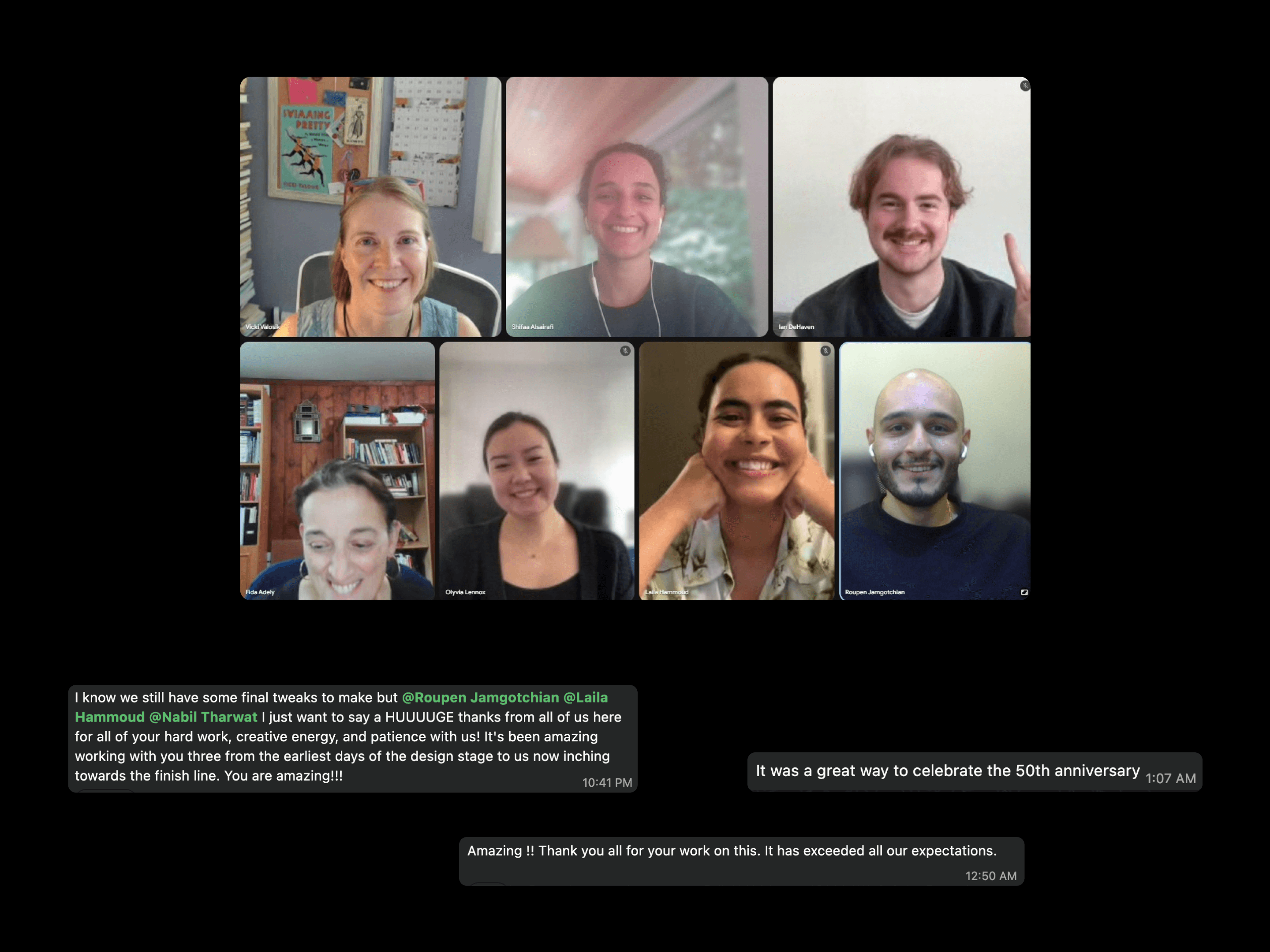
“We came to Roupen with a concept and a massive data sheet with archival material and they built it into a beautiful and functional site. Throughout the process, his team ensured that our vision came to life.”
Dr. Fida J. Adely, Director, CCAS Georgetown
reflection
Aligning different minds is the goal
The hardest part was aligning 8 stakeholders into a unified vision. Through workshops, I learned that the best way forward wasn't adding more features but finding the right question: What story are we telling? That shift in framing unlocked everything.
The best outcomes come from collaborative discovery. Rather than simply executing a feature list, we worked together to uncover the core story the archive needed to tell. This partnership approach helped us build something that truly served their vision.
Credits
Design Lead & Project Manager — Roupen Jamgotchian
Designer — Laila Hammoud
Developer — Nabil Tharwat
Client — Georgetown University Center for Contemporary Arab Studies
With thanks to the CCAS leadership and staff for their collaboration throughout.